
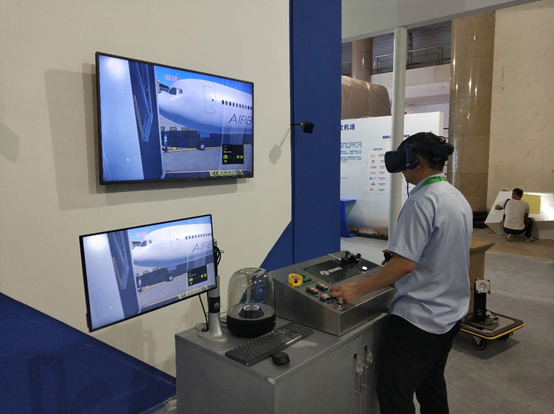
Traditional product cognition, assembly, operation, inspection and maintenance, and emergency disposal training are mainly carried out in the form of pictures and texts, videos, and practical training. Trainees can only use hard textbooks and teaching videos to obtain theoretical knowledge of work, which often differs greatly from reality. Through the construction of a practical training environment, the input cost is high, the content that can be taught is limited and limited due to site restrictions, and the experience of teachers is not easy to inherit. Moreover, there is a lack of excessive links between theoretical teaching and practical training. Only after accepting the theoretical knowledge, it is practiced immediately, and there is a risk of damage to personnel and equipment.
With the development of virtual reality technology, virtual training has gradually become one of the important means of key technical training. It has been widely used in education and practical training, engineering machinery, military drills, information management, design display and other fields at home and abroad due to its characteristics of no personnel and emergency equipment damage risk in training, repeatable drills and scientific analysis scoring, and immersive sensory experience for realistic simulation of scenarios with potential safety hazards.
Key features of the virtual training include:
Cognitive training. Appearance cognition, structure cognition, key performance parameter cognition, function and application scenario cognition, work theory cognition, etc. The concealed structure is viewed by cutting transparently, and the working principle of visual representation is transmitted through invisible energy such as sound, light, electricity, and gas.
Training in assembly, operation, maintenance and troubleshooting. New product preparation, operation and use, replacement of consumable parts, as well as operation training to cope with different working conditions, regular maintenance and operation training, performance detection, analysis and judgment of typical faults, and repair and operation training. Provide a comprehensive working condition simulation environment, which can specify or randomly preset various faults. The training consists of 3 modes, fully self-teaching demonstration, familiarization training under step-by-step prompts, and fully autonomous training and assessment.
Emergency response training. Simulate various man-made, accidental and natural accident scenarios to achieve emergency drills in a realistic environment. Simulate a variety of dangerous, rare, and extreme accident scenarios without worrying about damage to personnel and equipment.
Assessment scores. Provide teaching auxiliary system, the system will be divided into teacher side and student side, and provide a complete set of personnel registration, login, onboarding, credit management system, as well as a set of test bank management, test content editing and release management, assessment and grading management system.
Multiple people working together. For more complex collaborative operations, it provides multi-person collaborative simulation services, supports multiple forms of local local area networks and wide area networks, and supports interactive training across different platforms.
Virtual training provides operation and maintenance personnel with more clear, accurate, easy to accept, convenient to inquire, professional and intimate virtual simulation product guidance, improves training efficiency, reduces training costs, and becomes a high-energy value-added service of the product. At the same time, customers have a deeper grasp of the product and reduced operation and maintenance costs;