
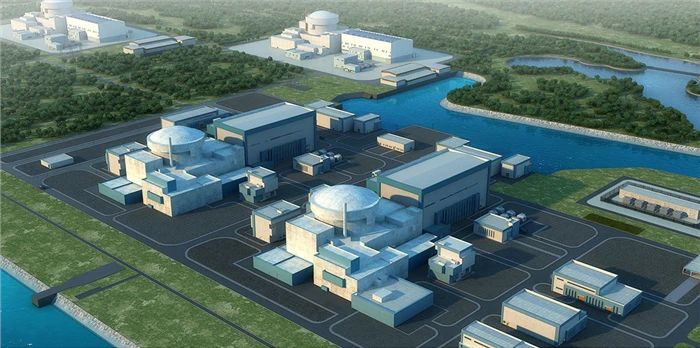
As an important clean energy source, the safe use of nuclear power is of paramount importance. The rise of virtual reality simulation technology has brought new opportunities for nuclear power safety. Virtual reality simulation technology provides strong support for nuclear power safety by simulating all aspects of the whole life cycle of nuclear power plants, helping with design verification, scheme optimization, etc. The application of virtual simulation technology can improve the safety of nuclear power plants, simulate dangerous situations, safety drills, and improve emergency response capabilities; improve operational efficiency, shorten verification cycles, optimize maintenance, and improve design efficiency; reduce design costs, and reduce physical experiments and personnel training costs. The application of virtual reality simulation technology opens a new era of safety and efficiency for nuclear power, let's look forward to it together!
I. Exploration and Verification of Virtual Simulation Technology of CGNRI
After the completion of the traditional nuclear power platform design plan, there is a lack of effective verification means. With professional experience, the plan is evaluated and reviewed. After the program review is completed, the plan template is built, and then the assembly and maintenance operations are simulated and verified. The problem points found in the verification process are modified and repeatedly verified. This process results in a significant increase in design cycles and costs.
In order to solve the design pain points, China Guangdong Nuclear Research Institute Co., Ltd. has comprehensively built a digital collaborative design laboratory. Guided by "Industrial Design 4.0", the laboratory has built a collaborative design system, realized digital collaborative design and standardized management, which can significantly improve the efficiency and quality of new reactor research and development, and help the safe and efficient operation of nuclear power. Taking the data R&D collaborative design platform as the core, the laboratory integrates functions such as intelligent pipeline design, intelligent plotting of support and hanger, and mechanical simulation calculation, which breaks through the barriers of multi-professional collaborative work and can meet the requirements of multi-professional collaborative design.
The laboratory builds a data R&D simulation and verification platform to verify data using virtual reality simulation technology. The platform is equipped with advanced display equipment and motion capture equipment, which can verify functional characteristics such as material change process, logistics channel, installation space, overhaul space, and operation space, as well as collaborative operation simulation of human models in a virtual digital environment. The collaborative simulation accuracy reaches millimeter level, providing reliable support for reactor R&D design.
Based on the application of virtual reality simulation technology, the laboratory improves the R&D efficiency and effectively shortens the design cycle; improves the design quality, finds design defects in advance, and realizes program verification in the early stage of R&D; reduces the R&D cost, and the use of virtual reality simulation technology will reduce the cost of physical prototyping and testing.
2. Virtual digital R&D simulation and verification platform
Virtual reality simulation technology consists of display system, VR system, motion capture system and software system. Through the cooperation of various systems, virtual reality technology and simulation technology are combined to build a realistic virtual environment, allowing designers to interact with virtual models, and conduct program research and simulation analysis in the virtual environment.
Platform Architecture
Display system: Small-pitch led screen, supporting active 3D display, 2D/3D compatibility; large display screen is used to support the reporting and review of the program, as well as senior leadership debriefing, visits and demonstrations.
LED display large screen
VR high-definition display device: Varjo headset, which provides excellent visual experience, built-in eye tracking function, automatic pupil distance adjustment, and its hardware has 1° analysis accuracy and 200Hz eye tracking technology. The product also seamlessly switches between MR and full VR, blending the benefits of both worlds into one device. This means that professionals can test designs in different environments and manipulate the environment with pixel control.
Varjo Headset
Motion capture system: Optical motion capture equipment and CAPTIV inertial motion capture equipment are used to realize real-time acquisition of human body data. Optical motion capture can accurately measure and record the motion trajectory or gesture of the object in real three-dimensional space in real time, and reconstruct the motion state of the moving object at every moment in virtual three-dimensional space.
Optical motion capture
CAPTIV inertial motion capture equipment is a product based on motion capture and human behavior analysis. The use of inertial motion capture allows the operator to move widely, and can record the attitude of the person in the occlusion scene, which makes up for the inability of optical motion capture to capture the attitude of the person in a complex environment.
Captiv kinetic capture
Software system: Developed based on the 3DEXPERIENCE platform software, connected to the dynamic capture hardware, connected to the human body motion capture data, realized the human body model driven by the dynamic capture equipment, completed the simulation of human body movement and maintenance process, and realized the ergonomic analysis of the operation process and the analysis of the maintenance process. Based on software development, automatic output of operation process records and results reports is realized.
Moving and capturing drive mannequin
III. Project Value
The completion and commissioning of the laboratory marks an important step for CGN's digital technology innovation in the field of interconnected applications and reactor-type research and development in the field of digital synergy technology. This not only promotes the process of CGNG's digital transformation, but also creates significant value in the design and verification of nuclear power platforms through the application of virtual reality simulation technology:
Significant improvement in R&D efficiency: Designers can use virtual reality technology to validate design schemes in advance and optimize by comparing different schemes, effectively shortening the entire design cycle. Total improvement in design quality: With immersive perception technology, designers can quickly and accurately identify flaws in their designs. In addition, through human-computer interaction simulations, functionality, scenarios, and performance can be validated at an early stage of product development. Effective reduction of design costs: Virtual verification simulation through virtual reality simulation technology reduces the cost of manufacturing and testing physical prototypes. At the same time, the technology can also be used for maintenance verification, further reducing the cost of after-sales maintenance. Significant increase in market competitiveness: The use of virtual reality technology to promote new products and enhance the competitiveness of products in the market through user experience and virtual marketing activities.